I sat down with the idea to blog and I got distracted by the idea of creating a Christmas card. Squirrel! Wow, how easy it is to get distracted this time of year. It's a couple of weeks until Christmas and there is so much to do. Time for a little reflection.
I don't know what to write, I just want to write. Here's why. I have too much to say. My mind is whirling. I had a great day at work. I talked to a lot of really lovely people today. I've also been reading a great book. I also came to my senses. So far Friday the 13th has been pretty good.
I'll start with work. I had a potluck with the EAP (English for Academic Purposes) students today. I meet with a couple of the EAP students every week so I got an invitation to the potluck. Every year the students host a potluck and cook food that is delicious and a cultural smorgasbord. Delightful. Even better is the conversation. The students are from all over the world and they get along so well. There's a lot of laughter and support among the students. It always reminds me of how much we are all so similar while being so different. Diversity is a wonderful thing. It is a positive experience to be involved with this group and I applaud the faculty who work so well with the students; all such determined adults with amazing stories to share. They've seen and been through so much. It's eye-opening to hear their stories and it makes me proud to be a part of an organization that supports such an inclusive environment.
I had a good work day too. My colleagues are wonderful, all very dedicated and thoughtful. It's not easy to be the extrovert in a room full of introverts but they put up with me. I love what I do and where I work. Lucky? Oh yes. I'm not saying it's all sunshine and roses everyday but pretty damn close.
So I'm pretty happy with work. My children are lovely too. they both came home with great report cards and I am very proud of them.
I'm sitting at home now. It's a cute house albeit in need of a lot of work. My house is the only un-renovated house in the area but at least it's mine, warts and all. My cat welcomed me when I came in the door, squawking on and on about his day. We had a rough start, the kitten and I, but the cat and I get along great now.
I'm reading a fabulous book called 'The Ascent of Humanity' which I can only handle reading a section at a time. It's a book jammed with all sorts of ideas and insight into our world that are realistic but somewhat optimistic in nature. A rarity for a non-fiction novel. It's nice to read a bit before going to sleep...makes me think about our society and where we are heading.
I'm listening to folky Christmas tunes on CBC radio 2. A mishmash of alternative and varied tunes that you won't find on the top 40 stations. I'm drinking some nice red wine and sneaking a cigarette indoors because it is freezing outside today.
What a nice day. And I REALLY appreciate it. All the bad things happening in my life are parked at the door today. It's heaven really.
I said that I came to my senses recently and that is partially why I can appreciate where I am right now in my life. It finally dawned on me that I can be happy. It is simply a choice to be happy or not. And I choose to be happy. As happy as I can be; and grateful for what I do have. Life IS what you make of it. Taking chances is good. Taking risks is good. Being patient is good. Letting go is good. Accepting imperfection is good.
My point! It's simple I think. it begins with 'shut up' and ends with 'get over it'. Stop complaining, it's a useless thing to do and changes nothing. On FaceBook a friend posted a graphic the other day with words that basically said that if you are doing something you don't feel right about, walk away. What could be more truthful than that? Stop doing what you don't like and start doing what you do like. Why should that be difficult to do? Yes, some of what we have to do is not our favourite thing to do but it usually takes up only a small percentage of our day. Why dwell on that?
I'm not saying to be naive or ignorant. Definitely be well-informed, well-read and current, but put it into perspective. If you want change, do what YOU can from where you are. It will make you happy. Be creative, share your ideas, try something new, failure is OK and usually a great learning experience. Stay safe, be wise, be open to new ideas. If you disagree, think about why you disagree and fill in the gap with your knowledge and experience. Don't doubt things, ponder things instead.
We are living in a spectacularly rich environment with so much information at our finger tips that we should never be bored. NEVER! No one should ever say they are bored.
Please have a lovely day today. Merry Christmas!
13 December 2013

24 November 2013
Exercise is Spiritual

Today I write about exercise. To me, lacking any sense of connection to any organized religion and amused by the unwarranted devotion and fake sincerity of zealots, the gym may be the closest thing I have to a church.
Yes, exercise is a spiritual experience. I can only speak for myself but it seems that the point at which I cross the threshold, swimming or running, is the closest I will ever got to any sort of god. When the mind and body split, it IS a spiritual experience. What happens at that point...the threshold? Why is it at a certain point in exercise the body shifts into automatic and frees the mind? It's a fantastic experience and I think people who experience passing the threshold want to re-experience the sensation again and again.
Might I add that it comes natural to kids...who know the joy of exercise and play.
It takes a lot of time and practice to get to the point of being able to pass the threshold. It takes work and commitment. The improved fitness and health, well, they are just rewards for dedicating time to yourself. Exercise decreases stress and makes you feel good. You look better, walk taller, feel like you're achieving something. What religion is better than that? What religion can make people feel good and live better without hurting, judging and denouncing others? Name one. I can't.
When you stop exercising, you start to feel bad, maybe even look bad, and feel guilty or disappointed in yourself. Why is this? I think it is because of a lost connection to something that is, or was, a spiritual experience. I don't know, maybe this massive technological explosion is cutting off our spiritual connection which would be disastrous. Maybe it will be our downfall.
Go get some exercise please.
03 May 2013
Therapy Session
Is your life crazy? Work too crazy? Love life too crazy? Family life too crazy? What to do? I have no idea. How can we handle multiple pressures without getting crushed? Sometimes I bemoan the situation I am in...or in which I find myself. Perhaps you do the same.
I sometimes play this mind-game where I attempt to make sense of all the craziness, which only makes me think "good lord, this is way too much to handle." And so, I prefer to acknowledge that my situation could be way worse...as it is for many people. I think about being selfish, greedy, needy and insecure. I think about being fortunate for what I do have and try not to focus on what is wrong or missing. It is a mental-game, but it works.
Often it is said that life is a puzzle and we have to figure out what piece is missing. I disagree! Life is a mystery and all we can do is do our best with what we have. By that I mean that we have to do what we think it right and try not to hurt anyone in the process. To hell with the missing piece.
But, caution...do not foolishly skip around thinking only of how great is the world. There are villains out there. I am not referring to criminals but those who try to destroy others for their own gain. Watch out for them. Watch but do not react. Many villains are lost and do not realize that they are destructive. Some think they are doing the right thing. Beware. They will try to lead you astray. Be wise. Be confident. Be brave.

Lead yourself and others will follow. Don't wait for others to act or lead you. There are no heroes, only ordinary people doing things that we all ought to do. Believe in the impossible. Empower yourself and try to find a focus, a passion, a path. The worst thing is to be an aimless wanderer. Worse still to be a sheep.
Mistakes will be made so learn from them, don't repeat them. Mistakes are common, it happens. No one is perfect. Don't dwell on mistakes. Change your attitude.
What excites you? What inspires you? What makes you happy? Answer these questions privately, no one needs to know. Don't be jealous or insecure. Don't envy others. Everyone is different and on a different path. No two can be the same. Yours is unique and only you get to experience it. No one is completely happy and if they say they are, c'mon...they are lying.
Listen to happy music! Good, punchy, mood-changing music and dance to it. Thank god for music! You are the writer of your own story. Make it a good one!
17 February 2013
Saw, Axe, Wedge
I have not written for a very long time. I've been very preoccupied, with a relationship. But now I'm back and that means more reading, more reflection and more questions.
Firstly, having relationships, although difficult, are a great way to learn more about yourself because you get to see yourself through the eyes of someone else...always humbling...and important. It's too easy to fall into the trap of blinding self-confidence when you are not confronted with different ideas and sometimes challenging criticisms. Adding a new perspective to your view of things only makes the picture bigger, but not necessarily easier. I think I have a few more questions and a few more quasi-answers than before. I was naive in many respects.
That said, I'm rethinking some things and cautiously researching more carefully what I love to learn about, namely sustainability. Ugh, I hate using that word but it's fairly easy to surmise that I mean society, culture, economy and the environment. Sustainability is a word so big and so all-encompassing that it is easily misinterpreted and often misused. But lets leave that discussion for another day.
I was reading A Sand County Almanac again, by Aldo Leopold, and found myself reflecting on something he wrote:
 Saw, axe and wedge. Wow. Leopold alludes to the study of history and I can't help but think that his allegory reveals to me my own flawed thinking of sustainability. The concept of sustainability certainly is not new but how we think about it is. When we think about it, what do we think of? Do we saw through the layers in time tracing back to the root cause? Do we instead look for a single point in history and wedge out a chunk of time from there? Or, do we just cut through the periphery and examine only the recent past. In each case, each analysis will reveal very different results and each case, irrespective of the other, will provide false answers to the age-old question about man and nature. Or should I say man in nature? even this perspective assumes there is a divide between man and nature so the question itself is flawed.
"I don't understand myself. I want to do what is right but I do not do it. Instead, I do the very thing I hate ... It seems to be a fact of life that when I want to do what's right, I inevitably do what's wrong." (Romans 7:15)
The challenge then is to figure out what the hell I am doing and why I am doing it. STEP. Why am I so curious and engaged with sustainability? STEP. Why do I not feel a personal connection? STEP. Why do I let myself be fooled by my own lack of understanding? STEP. These are questions that might help get to the root of my own personal biases that apparently affect everything in my life. Hopefully thinking about the saw, axe and wedge collectively I will do better...but it's a hard task to fell the tree to find an answer.
Firstly, having relationships, although difficult, are a great way to learn more about yourself because you get to see yourself through the eyes of someone else...always humbling...and important. It's too easy to fall into the trap of blinding self-confidence when you are not confronted with different ideas and sometimes challenging criticisms. Adding a new perspective to your view of things only makes the picture bigger, but not necessarily easier. I think I have a few more questions and a few more quasi-answers than before. I was naive in many respects.
That said, I'm rethinking some things and cautiously researching more carefully what I love to learn about, namely sustainability. Ugh, I hate using that word but it's fairly easy to surmise that I mean society, culture, economy and the environment. Sustainability is a word so big and so all-encompassing that it is easily misinterpreted and often misused. But lets leave that discussion for another day.
I was reading A Sand County Almanac again, by Aldo Leopold, and found myself reflecting on something he wrote:
"The saw works only across the years, which it must deal with one by one, in sequence. From each year the raker teeth pull little chips of fact, which accumulate in little piles, called sawdust by woodsmen and archives by historians; both judge the character of what lies within by the character of the samples thus made visible without. It is not until the transect of is completed that the tree falls, and the stump yields a collective view of a century. By its fall the tree attests the unity of the hodge-podge called history.
"The wedge, on the other hand, works only in radial splits; such a split yields a collective view of all the years at once, or no view at all, depending on the skill with which the plane of the split is chosen. (If in doubt, let the section season for a year until a crack develops. Many a hastily driven wedge lies rusting in the woods, embedded in unsplittable cross-grain.)
"The axe functions only at an angle diagonal to the years, and this only for the peripheral rings of the recent past. Its special function is to lop limbs, for which both saw and wedge are useless."
 Saw, axe and wedge. Wow. Leopold alludes to the study of history and I can't help but think that his allegory reveals to me my own flawed thinking of sustainability. The concept of sustainability certainly is not new but how we think about it is. When we think about it, what do we think of? Do we saw through the layers in time tracing back to the root cause? Do we instead look for a single point in history and wedge out a chunk of time from there? Or, do we just cut through the periphery and examine only the recent past. In each case, each analysis will reveal very different results and each case, irrespective of the other, will provide false answers to the age-old question about man and nature. Or should I say man in nature? even this perspective assumes there is a divide between man and nature so the question itself is flawed.
When I think about sustainability I think I have a habit of rejecting what the axe reveals because it doesn't tell the whole story and get to the root. Even the wedge doesn't get to the root and I am way too focused on the root, the beginning of it all. Conversely, when I think about my relationship I focus way too much on the axe and wedge revelations and not the whole multi-layered, historically revealing slice from a saw. And I am baffled. Why do I do this? Is it my personal bias? I think so. It's too hard to get to the root of a relationship because it painfully reveals so much about yourself that you don't want to see or accept. It's too personal.
This tells me that my desire to find the root cause of sustainability might mean that I am not personally attached to it. I don't see myself in the layers of time that lead us to where we are now, and that is wrong. My cultural-bias is too strong despite my most sincerest belief that I am thinking with an open mind. Obviously I am not. Leopold could connect with the natural world in a way that I can only admire and not fully understand.
Cautiously I can move forward with this new awareness. Goodness, I knew that I was thinking with a 'western' perspective, I understand that...and was aware of that. But I did not realize that I was not feeling personally connected to the situation. I don't blame myself because I've removed myself from the cross-examination. The fact is I don't practice what I preach. I just preach it like sustainability is some sort of religion. And, now, immediately as I write this I want to defend myself to say that at least I'm doing something. What hell is this?!
St. Paul wrote:
"I don't understand myself. I want to do what is right but I do not do it. Instead, I do the very thing I hate ... It seems to be a fact of life that when I want to do what's right, I inevitably do what's wrong." (Romans 7:15)
Mark Twain wrote:
"A habit cannot be tossed out the window. It must be coaxed down the stairs one step at a time."
"A habit cannot be tossed out the window. It must be coaxed down the stairs one step at a time."
The challenge then is to figure out what the hell I am doing and why I am doing it. STEP. Why am I so curious and engaged with sustainability? STEP. Why do I not feel a personal connection? STEP. Why do I let myself be fooled by my own lack of understanding? STEP. These are questions that might help get to the root of my own personal biases that apparently affect everything in my life. Hopefully thinking about the saw, axe and wedge collectively I will do better...but it's a hard task to fell the tree to find an answer.
02 September 2011
The File Folder
I am sitting here at my desk mindlessly watching a co-worker pass by with a file folder in her arms. What is her story? Is she coming from a meeting or going to a meeting? She looks tired, was it a bad meeting or is she not looking forward to where she is going? Either way, doesn't matter, I am interested in the file folder she's holding.
What is in that folder? Something important or a just a collection of meeting agendas and minutes; souvenirs of time spent in meetings. That folder looks light enough but it looks like a burden too. For some reason we value these little bundles of paper. Do the file folders give us a sense of control or importance? When we hold them close to our chests, are we wearing them like a badge or a chest plate?
It is interesting how we have come to be so reliant on file folders. I wonder how we organized our lives in the past...the days before file folders. When was that exactly? According to wikipedia, the vertical filing cabinet like we use today was invented by Edwin G. Seibels in 1898. Poor guy applied for a patent but was turned down. What a rip off. Before this, papers were kept in envelopes stored in numerous little pigeonholes lining walls...not the most efficient system. But I bet there was a lot less paper kicking around, there were only so many pigeonholes. Of course they didn't have computers to store a lot of crap. What did they do with their crap? Did they keep crap? (Naturally I am not referring to libraries which categorically store resources and archives...I'm talking about the day to day stuff we so love to keep around us.)
A couple of years ago I was in cultural competency training for my placement in Kathmandu. A guy came in to talk about his experience in Botswana with the local tribe. He went there to help them record their traditions and history so they could present something tangible to the government. The tribe wanted the government to recognize them as a distinct society. So he helped them record oral accounts, images, stories and maps on a computer. Teaching his counterparts how to store the information was not easy because the tribesmen had no previous encounter with file folders or filing systems. Asking someone to file something is very cultural. To assume that everyone knows what a file is, or what to do with it, is a mistake. It is an invention that has been taken for granted.
 We often fall into the trap believing that there is one way of doing things, it is ubiquitous. I think this is dangerous. I am sure that the file folder was a great invention and proved to be more efficient than the walls of pigeonholes and letters. But, that was then and this is now. We seem to be trapped in some sort of vortex where everything has to be sorted, classified, organized and filed in very obscure patterns.
If I got rid of my folders..what would happen? Is it possible? Of course it is possible. I have to think carefully about what it is I am keeping and for what reasons. What am I without my stuff? Do I need an anchor or can I drift? Am I allowed to drift...at what cost? Is it true that we are more than what we own?
What is in that folder? Something important or a just a collection of meeting agendas and minutes; souvenirs of time spent in meetings. That folder looks light enough but it looks like a burden too. For some reason we value these little bundles of paper. Do the file folders give us a sense of control or importance? When we hold them close to our chests, are we wearing them like a badge or a chest plate?
It is interesting how we have come to be so reliant on file folders. I wonder how we organized our lives in the past...the days before file folders. When was that exactly? According to wikipedia, the vertical filing cabinet like we use today was invented by Edwin G. Seibels in 1898. Poor guy applied for a patent but was turned down. What a rip off. Before this, papers were kept in envelopes stored in numerous little pigeonholes lining walls...not the most efficient system. But I bet there was a lot less paper kicking around, there were only so many pigeonholes. Of course they didn't have computers to store a lot of crap. What did they do with their crap? Did they keep crap? (Naturally I am not referring to libraries which categorically store resources and archives...I'm talking about the day to day stuff we so love to keep around us.)
A couple of years ago I was in cultural competency training for my placement in Kathmandu. A guy came in to talk about his experience in Botswana with the local tribe. He went there to help them record their traditions and history so they could present something tangible to the government. The tribe wanted the government to recognize them as a distinct society. So he helped them record oral accounts, images, stories and maps on a computer. Teaching his counterparts how to store the information was not easy because the tribesmen had no previous encounter with file folders or filing systems. Asking someone to file something is very cultural. To assume that everyone knows what a file is, or what to do with it, is a mistake. It is an invention that has been taken for granted.

If I got rid of my folders..what would happen? Is it possible? Of course it is possible. I have to think carefully about what it is I am keeping and for what reasons. What am I without my stuff? Do I need an anchor or can I drift? Am I allowed to drift...at what cost? Is it true that we are more than what we own?
04 December 2010
Spinning out of Control
Spinning, spinning, spinning. The world goes round and round. Around the sun we go, day and night, tides and currents continue on their faithful paths. And around and around the people go, faithful to our daily routines, birth to death, nation to nation, city to city, neighbour to neighbour, lover to lover, mother to child. We spin until we're dizzy.
We, in the West, are so dizzy and off balance we can't clearly see what is right before our eyes. Nature has a natural spin, a flow that is balanced. Night has day, tides come in and out, summer has winter. People however do not have balance. We consume and make waste but we do not consume our waste. We take from nature but we do not give back. We share with our neighbours but not with others. We break but we do not repair.
So, we need to stop spinning in one direction for a while. We need to pause, regain some balance, and either reverse spin or continue on at a slower pace. What am I trying to say? All actions have consequences and to date we are not taking the responsibility to account for our actions. In society we have to examine our actions both by our intentions and the ramifications of our actions. No plan should go ahead without a researched analysis and plan to manage the consequences. Example of no balance? Easy, BP, Afghanistan, Iraq, colonialism...shall I go on...?
How to slow down spinning? Well, think about when you spin around too fast, the first thing you notice...other than the pleasure...is a blurred view of the surroundings. But you keep going because it's fun. And then you start to notice that you're feeling off balance so you decide to stop...and whammo! You are stumbling around, bumping into things. Kids love it, Adults...not so much.
What is my point? We've been having a lot of fun in our post-industrialized society learning new ways to make our lives better and easier but we've started to notice that our view of the world may be a bit skewed. We've not been able to see the people on the sidelines who are not spinning, the disappearing plants and food and animals. So now we're at the point where we not only need to but want to stop spinning. Wow, is it ever going to mess us up. We should expect to be so dizzy and off-kilter that we have to sit down.
Uh-oh. Sit down? What does that mean? So that someone else can spin? That's a scary thought; we want to spin. We've been happily spinning so long. What might the view be like from a seated position? We've surely been there before, a long time ago. But what fun is there in sitting? Well, for starters, we can see more clearly and maybe we can talk to someone else who has been sitting down for a while watching, quietly observing us spin so happily.
In the Western world, we have to stop. Just stop. What might life be like if we lived like the majority of the world? I'm guessing most of us don't want to live that way. So, what if we all got up out of our seats together in a big circle and slowly start to spin together, smile for each other instead of for ourselves. We won't be dizzy but we will have a lot more fun and so will everyone else.
I have no ideas where this spinning thought came from. I had intended to write about the complexity within each of us and how to find a way to connect our own individuality to the complexity of global citizenry and sustainability. Maybe I'm not ready to write about complexity yet. Maybe it comes from the Mindfulness in Leadership retreat I attended yesterday with the Authentic Leadership institute (ALIA) led by Alan Stone. Maybe it was something someone said to me last night. I did have a vision of each of us as our own planet, with our own orbit and gravitiational pull towards one another. But we're so complex...we tend to spin on our own axis. Ya...I need to think about it a bit more. Maybe next blog.
We, in the West, are so dizzy and off balance we can't clearly see what is right before our eyes. Nature has a natural spin, a flow that is balanced. Night has day, tides come in and out, summer has winter. People however do not have balance. We consume and make waste but we do not consume our waste. We take from nature but we do not give back. We share with our neighbours but not with others. We break but we do not repair.
So, we need to stop spinning in one direction for a while. We need to pause, regain some balance, and either reverse spin or continue on at a slower pace. What am I trying to say? All actions have consequences and to date we are not taking the responsibility to account for our actions. In society we have to examine our actions both by our intentions and the ramifications of our actions. No plan should go ahead without a researched analysis and plan to manage the consequences. Example of no balance? Easy, BP, Afghanistan, Iraq, colonialism...shall I go on...?
How to slow down spinning? Well, think about when you spin around too fast, the first thing you notice...other than the pleasure...is a blurred view of the surroundings. But you keep going because it's fun. And then you start to notice that you're feeling off balance so you decide to stop...and whammo! You are stumbling around, bumping into things. Kids love it, Adults...not so much.
What is my point? We've been having a lot of fun in our post-industrialized society learning new ways to make our lives better and easier but we've started to notice that our view of the world may be a bit skewed. We've not been able to see the people on the sidelines who are not spinning, the disappearing plants and food and animals. So now we're at the point where we not only need to but want to stop spinning. Wow, is it ever going to mess us up. We should expect to be so dizzy and off-kilter that we have to sit down.
Uh-oh. Sit down? What does that mean? So that someone else can spin? That's a scary thought; we want to spin. We've been happily spinning so long. What might the view be like from a seated position? We've surely been there before, a long time ago. But what fun is there in sitting? Well, for starters, we can see more clearly and maybe we can talk to someone else who has been sitting down for a while watching, quietly observing us spin so happily.
In the Western world, we have to stop. Just stop. What might life be like if we lived like the majority of the world? I'm guessing most of us don't want to live that way. So, what if we all got up out of our seats together in a big circle and slowly start to spin together, smile for each other instead of for ourselves. We won't be dizzy but we will have a lot more fun and so will everyone else.
I have no ideas where this spinning thought came from. I had intended to write about the complexity within each of us and how to find a way to connect our own individuality to the complexity of global citizenry and sustainability. Maybe I'm not ready to write about complexity yet. Maybe it comes from the Mindfulness in Leadership retreat I attended yesterday with the Authentic Leadership institute (ALIA) led by Alan Stone. Maybe it was something someone said to me last night. I did have a vision of each of us as our own planet, with our own orbit and gravitiational pull towards one another. But we're so complex...we tend to spin on our own axis. Ya...I need to think about it a bit more. Maybe next blog.
03 October 2010
A Cause for Celebrity
I should be going to bed, it's late but I can't. My mind won't let me. I'm feeling a bit distraught at the moment...let me explain.
I love David Suzuki. He's been an inspiration to me for decades. In the early nineties I became a fan when I saw him on the bus to UBC when I was going to class. I thought "Yep, he's legit. Walking the talk." Tonight I had a chance to hear him talk at Dalhousie. I brought my daughter and his book to sign. I was so excited and thrilled that my young daughter would have a chance to hear this Canadian icon.
He was great...passionate, articulate, informative and wise. But I left the auditorium feeling sad. He's just a man, in his 70's now, probably slowing down a bit...not that you could tell from his talk. He's just a man.
He's dedicated his life to a cause that I am greatly concerned about and I fully support him and his Foundation. But...he's just a man.
I came home and turned on the TV for a sec to watch the news. The Abbey Lane show was on and to my great pleasure, the Killers were performing. My lucky day! Not so much. I watched them and that same feeling of sadness came over me. They're just a band, a bunch of guys playing instruments. Just ordinary people.
It dawned on me that I'm saddened by celebrity. What harm is being done by celebrity? We know the media attention that can come from it. People may listen more, give more money, buy more books. But then what? Does my sincere admiration for Suzuki lessen my admiration for others who are not celebrities. Would I recognize a photo of David Orr, Thomas Berry, Paul Hawken, Lester Brown or E.O. Wilson? No, of course not. But I admire them and their words. Does the fact that Suzuki is a celebrity diminish my admiration for him after seeing him in the flesh? Yes, unfortunately, it does.
Why? It might be because he's getting older now and we'll be looking out for the next Suzuki, the next leader to take us into the future. But there can't be another Suzuki can there? We can't depend on these leaders to lead us. We need to lead ourselves and learn from the wisdom of others who have taken the time to dedicate their lives for the betterment of all of us, not for celebrity status.
No, I am not saying that Suzuki sought fame, not at all. What I am saying is that celebrity has a dirty little tinge to it, it rubs the shine off the true brilliance of the person.
No one will be the next Suzuki so where does that leave us? Where are we without our reliable, constant and true leaders who will tell us what we need to know and believe?
Suzuki talked about our fatalistic inclination to worship the economy and how dangerous it is to put economy before ecology. Truer words were never spoken. But, we idolize him...he's our beacon, our voice, our leader. When he is gone, so will be his light and I fear we will be soon groping around in the dark.
I love David Suzuki. He's been an inspiration to me for decades. In the early nineties I became a fan when I saw him on the bus to UBC when I was going to class. I thought "Yep, he's legit. Walking the talk." Tonight I had a chance to hear him talk at Dalhousie. I brought my daughter and his book to sign. I was so excited and thrilled that my young daughter would have a chance to hear this Canadian icon.
He was great...passionate, articulate, informative and wise. But I left the auditorium feeling sad. He's just a man, in his 70's now, probably slowing down a bit...not that you could tell from his talk. He's just a man.
He's dedicated his life to a cause that I am greatly concerned about and I fully support him and his Foundation. But...he's just a man.
I came home and turned on the TV for a sec to watch the news. The Abbey Lane show was on and to my great pleasure, the Killers were performing. My lucky day! Not so much. I watched them and that same feeling of sadness came over me. They're just a band, a bunch of guys playing instruments. Just ordinary people.
It dawned on me that I'm saddened by celebrity. What harm is being done by celebrity? We know the media attention that can come from it. People may listen more, give more money, buy more books. But then what? Does my sincere admiration for Suzuki lessen my admiration for others who are not celebrities. Would I recognize a photo of David Orr, Thomas Berry, Paul Hawken, Lester Brown or E.O. Wilson? No, of course not. But I admire them and their words. Does the fact that Suzuki is a celebrity diminish my admiration for him after seeing him in the flesh? Yes, unfortunately, it does.
Why? It might be because he's getting older now and we'll be looking out for the next Suzuki, the next leader to take us into the future. But there can't be another Suzuki can there? We can't depend on these leaders to lead us. We need to lead ourselves and learn from the wisdom of others who have taken the time to dedicate their lives for the betterment of all of us, not for celebrity status.
No, I am not saying that Suzuki sought fame, not at all. What I am saying is that celebrity has a dirty little tinge to it, it rubs the shine off the true brilliance of the person.
No one will be the next Suzuki so where does that leave us? Where are we without our reliable, constant and true leaders who will tell us what we need to know and believe?
Suzuki talked about our fatalistic inclination to worship the economy and how dangerous it is to put economy before ecology. Truer words were never spoken. But, we idolize him...he's our beacon, our voice, our leader. When he is gone, so will be his light and I fear we will be soon groping around in the dark.
27 April 2010
Sustainable Future
So...I'm on this sustainable future work team for the college academic plan and we've been challenged with the question of how to best prepare the current and next generation of learners with the skills, aptitudes and attitudes they will need to help shape an environmentally sustainable future for the Province. It's an interesting opportunity.
First we have to agree upon the term 'sustainability'. It's generally agreed that, like the unfortunate watering down of the term 'green', the corporate adoption of the term is now muddling the understanding of 'sustainability'. In corporate circles, it's been adopted to indicate longevity of a business or used to position oneself against the competition. It's less about society and the environment and more about economics...the economics of survival.
I've been using the term 'restorative' for a while now because I think it better reflects the rise of societal and environmental activism around the world; the heightened awareness of eco-degradation; the increasing desire for a simpler way of life to offset the incredibly fast pace of a materialistic industrialized western society...one that's on track to engulf billions of individuals around the globe. Restorative means to restore and make stronger. We can use our technologies and knowledge to not only replenish a weakened environment but to also enhance our environment with inclusive and innovative practices and policies. We can make our world a better place by committing to global equity, gender equality, eliminating warfare, engaging in peaceful religious and ethnic collaborations. We can restore the health of our environment and we can make our world a much better place to live.
That being said, sustainability is not a 'term' that can be defined because sustainability is not a thing, it is alive, just as any organism is alive. Organizations are living entities too, they evolve and grow and repair themselves like we do; it is not that people are the heart of an organization, rather it should be understood that the organization is in the heart of the people. How I see an organization is how it is communicated to me through the people that represent that organization. I am my organization, it is not me. I have my own soul which I use to express my connection with the organization's soul. If I do not relate well with the soul or expression of the organization it will be reflected in my relationship with the broader community.
So...back to the question 'how to best prepare the current and next generation of learners with the skills, aptitudes and attitudes they will need to help shape an environmentally sustainable future for the Province?"
I think when we think about our own relationships with other entities as life forms, we start to see them as not forms of hierarchy or power but as systems. We can better relate to systems because we ourselves are systems. How more natural is it to identify with our commonalities than to distinguish what makes us different...or weaker, or more powerful? it is intriguing to identify our strengths and similarities with others to see how we can be stronger. But in the western world, we don't do that. We look for ways to compete, survive, surpass, overcome, achieve, accumulate, advance and acquire. This means that we look for ways to stand apart from others, to be different, to gain respect. But, this is not a healthy sense of individuality and self-awareness. This is a sense of conformity and acquiescence. We survive and succeed by fitting into a mold predetermined by centuries of patriarchal, industrial rule.
Again...back to the question 'how to best prepare the current and next generation of learners with the skills, aptitudes and attitudes they will need to help shape an environmentally sustainable future for the Province?"
We now have a discourse on sustainability and a systems thinking approach to sustainability. What we have achieved is the breaking down of stereotypes and predetermined notions about sustainability and organizations. So now we must continue to break down barriers.
In a school, the most obvious barriers are: barriers to entrance, barriers between disciplines, barriers between gender, ethnicity, power, ability, access and language; barriers between student and faculty, faculty and administration, barriers between pedagogy and cultural understanding (evaluation, delivery, practice of the learning), barriers between institutions and industry; physical barriers between people in offices, cubicles, classrooms and single desks.
One way we could begin to prepare the current and next generation of learners with the skills, aptitudes and attitudes they will need is to remove barriers. Life does not draw a line in the sand between biology and poetry or math and art. One flows into the other naturally. In schools we've organized knowledge into neat and tidy piles of sand, each pile representing all things related to a particular discipline. How can that be? How can you draw without understanding angles? How can you visualize depth without art? They're inseparable yet we have moved them apart into different disciplines. Why is biology or ecology not taught to business students? Isn't it in the best interest of all business students to expose them to the realities of natural systems?
Let's agree that the removal of barriers, all barriers in an organization, will provide the access and exposure students need to develop an understanding of their world, local, national, regional and international. Great, but what will they do with their knowledge. Will they act on it? Does being informed equate with being engaged? Does empathy equate with compassion? No, in both cases, it doesn't.
A second way we could begin to prepare the current and next generation of learners with the skills, aptitudes and attitudes they will need to help shape an environmentally sustainable future for the Province is to engage them in their learning, in the process of becoming a citizen. All curriculum should include opportunities for students to apply their learning in a sustainable application; volunteerism, assignments, journaling, service learning, projects in the community, etc. Learning is important but so is the application of the learning and finding relevance or a personal connection to the learning. When we are able to make the connections between what we learn and the world, we grow. When we are able to change our environment based on our learning, we develop new understanding and skill.
The process we need is basically dialogue and deliberate action. But we're still missing something important. I call it taking down the exit sign.
When students enter school, secondary or post-secondary, it is a temporary task with a well trampled path laid out before them. Yawn. This linear path always has an exit sign symbolizing the end of your learning...now time to join the real world and get a job. I think this is totally wrong. Sure, it is a fine fit for the industrial age when assembly lines were the latest and greatest but this is no longer the industrial age, that 200 year adventure has gotten us into a heck of a mess. No, now we're in an information revolution and what I hope is the age of restoration. It would be enormously helpful if students entered the world of education as if it were a community that grew around you and sheltered you. instead of visualizing a path with a start and finish line, try to imagine a village with a town centre and surrounding neighbourhoods with their own specialities. A students should start in the middle of the community where most of the support is located and have the opportunity to explore the different neighbourhoods to learn and grow as individuals. Likewise, we should see this village as a manifestation of ourselves, with our soul in the centre encircled by life experiences and learning and adaptations. As we replenish the soul with our lives, we find our purpose and are better able to serve others. In the school centre students can replenish their learning through dialogue and sharing and recognition.
What was that question again...how to best prepare the current and next generation of learners with the skills, aptitudes and attitudes they will need to help shape an environmentally sustainable future for the Province. My answer would be to remove barriers, infuse sustainability learning and the application of that learning, and grow an inclusive soul-seeking community of learners.
First we have to agree upon the term 'sustainability'. It's generally agreed that, like the unfortunate watering down of the term 'green', the corporate adoption of the term is now muddling the understanding of 'sustainability'. In corporate circles, it's been adopted to indicate longevity of a business or used to position oneself against the competition. It's less about society and the environment and more about economics...the economics of survival.
I've been using the term 'restorative' for a while now because I think it better reflects the rise of societal and environmental activism around the world; the heightened awareness of eco-degradation; the increasing desire for a simpler way of life to offset the incredibly fast pace of a materialistic industrialized western society...one that's on track to engulf billions of individuals around the globe. Restorative means to restore and make stronger. We can use our technologies and knowledge to not only replenish a weakened environment but to also enhance our environment with inclusive and innovative practices and policies. We can make our world a better place by committing to global equity, gender equality, eliminating warfare, engaging in peaceful religious and ethnic collaborations. We can restore the health of our environment and we can make our world a much better place to live.
That being said, sustainability is not a 'term' that can be defined because sustainability is not a thing, it is alive, just as any organism is alive. Organizations are living entities too, they evolve and grow and repair themselves like we do; it is not that people are the heart of an organization, rather it should be understood that the organization is in the heart of the people. How I see an organization is how it is communicated to me through the people that represent that organization. I am my organization, it is not me. I have my own soul which I use to express my connection with the organization's soul. If I do not relate well with the soul or expression of the organization it will be reflected in my relationship with the broader community.
So...back to the question 'how to best prepare the current and next generation of learners with the skills, aptitudes and attitudes they will need to help shape an environmentally sustainable future for the Province?"
I think when we think about our own relationships with other entities as life forms, we start to see them as not forms of hierarchy or power but as systems. We can better relate to systems because we ourselves are systems. How more natural is it to identify with our commonalities than to distinguish what makes us different...or weaker, or more powerful? it is intriguing to identify our strengths and similarities with others to see how we can be stronger. But in the western world, we don't do that. We look for ways to compete, survive, surpass, overcome, achieve, accumulate, advance and acquire. This means that we look for ways to stand apart from others, to be different, to gain respect. But, this is not a healthy sense of individuality and self-awareness. This is a sense of conformity and acquiescence. We survive and succeed by fitting into a mold predetermined by centuries of patriarchal, industrial rule.
Again...back to the question 'how to best prepare the current and next generation of learners with the skills, aptitudes and attitudes they will need to help shape an environmentally sustainable future for the Province?"
We now have a discourse on sustainability and a systems thinking approach to sustainability. What we have achieved is the breaking down of stereotypes and predetermined notions about sustainability and organizations. So now we must continue to break down barriers.
In a school, the most obvious barriers are: barriers to entrance, barriers between disciplines, barriers between gender, ethnicity, power, ability, access and language; barriers between student and faculty, faculty and administration, barriers between pedagogy and cultural understanding (evaluation, delivery, practice of the learning), barriers between institutions and industry; physical barriers between people in offices, cubicles, classrooms and single desks.
One way we could begin to prepare the current and next generation of learners with the skills, aptitudes and attitudes they will need is to remove barriers. Life does not draw a line in the sand between biology and poetry or math and art. One flows into the other naturally. In schools we've organized knowledge into neat and tidy piles of sand, each pile representing all things related to a particular discipline. How can that be? How can you draw without understanding angles? How can you visualize depth without art? They're inseparable yet we have moved them apart into different disciplines. Why is biology or ecology not taught to business students? Isn't it in the best interest of all business students to expose them to the realities of natural systems?
Let's agree that the removal of barriers, all barriers in an organization, will provide the access and exposure students need to develop an understanding of their world, local, national, regional and international. Great, but what will they do with their knowledge. Will they act on it? Does being informed equate with being engaged? Does empathy equate with compassion? No, in both cases, it doesn't.
A second way we could begin to prepare the current and next generation of learners with the skills, aptitudes and attitudes they will need to help shape an environmentally sustainable future for the Province is to engage them in their learning, in the process of becoming a citizen. All curriculum should include opportunities for students to apply their learning in a sustainable application; volunteerism, assignments, journaling, service learning, projects in the community, etc. Learning is important but so is the application of the learning and finding relevance or a personal connection to the learning. When we are able to make the connections between what we learn and the world, we grow. When we are able to change our environment based on our learning, we develop new understanding and skill.
The process we need is basically dialogue and deliberate action. But we're still missing something important. I call it taking down the exit sign.
When students enter school, secondary or post-secondary, it is a temporary task with a well trampled path laid out before them. Yawn. This linear path always has an exit sign symbolizing the end of your learning...now time to join the real world and get a job. I think this is totally wrong. Sure, it is a fine fit for the industrial age when assembly lines were the latest and greatest but this is no longer the industrial age, that 200 year adventure has gotten us into a heck of a mess. No, now we're in an information revolution and what I hope is the age of restoration. It would be enormously helpful if students entered the world of education as if it were a community that grew around you and sheltered you. instead of visualizing a path with a start and finish line, try to imagine a village with a town centre and surrounding neighbourhoods with their own specialities. A students should start in the middle of the community where most of the support is located and have the opportunity to explore the different neighbourhoods to learn and grow as individuals. Likewise, we should see this village as a manifestation of ourselves, with our soul in the centre encircled by life experiences and learning and adaptations. As we replenish the soul with our lives, we find our purpose and are better able to serve others. In the school centre students can replenish their learning through dialogue and sharing and recognition.
What was that question again...how to best prepare the current and next generation of learners with the skills, aptitudes and attitudes they will need to help shape an environmentally sustainable future for the Province. My answer would be to remove barriers, infuse sustainability learning and the application of that learning, and grow an inclusive soul-seeking community of learners.
12 April 2010
Life's Not Fair
Sometimes procrastination for me means I get to blog. Yes, a blog is a therapeutic tool that comes in handy when avoiding other work. On to the therapy.
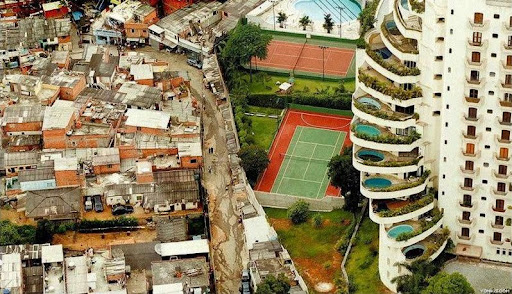
 I've been reading a lot about fairness lately, especially through the lens of ecofeminism ecology. It is striking what we value and what we don't value. In our patriarchal capitalist market-driven society we value production and power. Find it, make it, profit from it...find more, make more, earn more, spend more...on and on and on. We think about life as a 'thing', something to be consumed. It got me to thinking of what it would be like to live in a world where we valued the opposite of 'things'.
 If we could just retract that statement from everything we do we'd be left with a sense of responsibility for once. If it doesn't seem fair, either don't do it or find a better way to do it that is fair. Seems simple enough. But we don't take the time or effort because 'the world isn't fair'. Could it be that the 'developed' world is not concerned about millions of starving, sick and dying people in the low-income world because, well...'life's just like that, be glad you were born here and not there'? Now that India and China are developing, the Western world is crying foul because it's not fair, there are too many of them and they will make our energy and production costs skyrocket. Boo hoo...I guess life's not fair.
 I've been reading a lot about fairness lately, especially through the lens of ecofeminism ecology. It is striking what we value and what we don't value. In our patriarchal capitalist market-driven society we value production and power. Find it, make it, profit from it...find more, make more, earn more, spend more...on and on and on. We think about life as a 'thing', something to be consumed. It got me to thinking of what it would be like to live in a world where we valued the opposite of 'things'.
Imagine...a society where the highest value is placed on families raising children. In this world, parents earn a living by working in the community, helping other families, and raising their children to be good citizens; who are indeed the most valuable products of society. Teachers are highly valued because they are responsible for shaping the minds of children...the future leaders. Producers of goods and materials to mobilize and entertain families play a supportive role in this society and to acknowledge the value for what they do, the governing bodies would provide a monthly stipend to cover their costs (a sum determined by the government).
People know where their food comes from and they know how to grow some of their food, how to repair materials, and how to live comfortably. Mentors are highly regarded in society and sought out as leaders. This society values wisdom, not titles. This society values people, not things. This society understands how to live with nature, not to profit from it. Housework is valued as a skill, as are the skills of cooks, nurses, artists, farmers and tradespeople. Men and women are paid equally and recognized equally under law.
Even in dreaming of this world I have a hard time shaking the concept of money from my head. It is not easy to imagine a world where money is not the driving force, albeit an illusion of power. It is quite a crippling thing really, this money we so value and spend most of our lives trying to accumulate and spend. What would it be like to have a world without money...or without debt?
About fairness: I often hear the phrase 'well, the world is not fair' and it makes me angry. The phrase is so passively-aggressive that I find it frightening. What does it mean really? Since the world is not fair and we can't do anything about it, it's OK to be unfair? Exploiting other parts of the globe is OK because 'the world is not fair'? Bupkis!
 If we could just retract that statement from everything we do we'd be left with a sense of responsibility for once. If it doesn't seem fair, either don't do it or find a better way to do it that is fair. Seems simple enough. But we don't take the time or effort because 'the world isn't fair'. Could it be that the 'developed' world is not concerned about millions of starving, sick and dying people in the low-income world because, well...'life's just like that, be glad you were born here and not there'? Now that India and China are developing, the Western world is crying foul because it's not fair, there are too many of them and they will make our energy and production costs skyrocket. Boo hoo...I guess life's not fair.
03 April 2010
What Does Reading Do?
I read and read and read. I read about injustices all over the world, in the South Pacific, Indonesia, Central and South America and so on. I read about displaced populations, gender and poverty discrimination, hate, degradation, destruction and starvation. But, I also read about heroic acts, bravery, pride, determination, protests, confidence and strength.
And I read on...
Now I sit here typing this entry wondering what I am to do? Who am I? I read about many terrible things that are going on around the world and I want to cry. I want to cry because it is so horrible, because I am part of the problem, because I don't know what to do. I just read.
But it's not enough! I'm not content. What good am I if all I do is read? Do I not have any power to act? Let's see...
I don't have any real power here in Canada. I'm one of millions in the 'developed' part of the world. I work, have children, own my own home, have leisure time and plenty of time to read. I do what I can at a very small level regarding the environment. I plant trees, reduce paper waste, promote environmental awareness, raise funds for hospices and orphanages in South America and Zambia, live simply (or try to) and so on. Woopdeedoo. I don't deserve a pat on the back which I often get, I deserve a slap in the face. Well, maybe not a slap...
I know I can do more. But what? Should I go back to school for more education? What would that do? Should I sell my house and move to another part of the world to help? What can I do? I'm stumped. Should I write about what's going on in the world or about my own self-imposed oppression?
Listen to me...I can't, I don't...what a wimp. So, what to do? I can keep on reading and hope that someday I'll get some guts. Where does the fear come from? Am I afraid of change? Failure? My own inadequacies?
These are difficult questions to answer. I'm as good as the next person, maybe not as educated, powerful or rich. And to be honest, I don't understand why the world is as unfair as it is, why I get to live a comfortable life while others suffer, why I feel paralyzed to act.
So I'm not well educated (relative to what exactly I don't know), powerful (according to whom) or rich (compared to whom exactly). In my eyes, I should see myself as very educated because I am aware of what's going on and feel a need to act. I should feel powerful because I am strong and lucky and determined. I should feel rich, not because I earn and spend more than the majority of the world but because I have a family, a home, good health and a strong support network.
So, I have nothing to stop me. What next?
And I read on...
Now I sit here typing this entry wondering what I am to do? Who am I? I read about many terrible things that are going on around the world and I want to cry. I want to cry because it is so horrible, because I am part of the problem, because I don't know what to do. I just read.
But it's not enough! I'm not content. What good am I if all I do is read? Do I not have any power to act? Let's see...
I don't have any real power here in Canada. I'm one of millions in the 'developed' part of the world. I work, have children, own my own home, have leisure time and plenty of time to read. I do what I can at a very small level regarding the environment. I plant trees, reduce paper waste, promote environmental awareness, raise funds for hospices and orphanages in South America and Zambia, live simply (or try to) and so on. Woopdeedoo. I don't deserve a pat on the back which I often get, I deserve a slap in the face. Well, maybe not a slap...
I know I can do more. But what? Should I go back to school for more education? What would that do? Should I sell my house and move to another part of the world to help? What can I do? I'm stumped. Should I write about what's going on in the world or about my own self-imposed oppression?
Listen to me...I can't, I don't...what a wimp. So, what to do? I can keep on reading and hope that someday I'll get some guts. Where does the fear come from? Am I afraid of change? Failure? My own inadequacies?
These are difficult questions to answer. I'm as good as the next person, maybe not as educated, powerful or rich. And to be honest, I don't understand why the world is as unfair as it is, why I get to live a comfortable life while others suffer, why I feel paralyzed to act.
So I'm not well educated (relative to what exactly I don't know), powerful (according to whom) or rich (compared to whom exactly). In my eyes, I should see myself as very educated because I am aware of what's going on and feel a need to act. I should feel powerful because I am strong and lucky and determined. I should feel rich, not because I earn and spend more than the majority of the world but because I have a family, a home, good health and a strong support network.
So, I have nothing to stop me. What next?
Subscribe to:
Comments (Atom)

 Posts
Posts

